
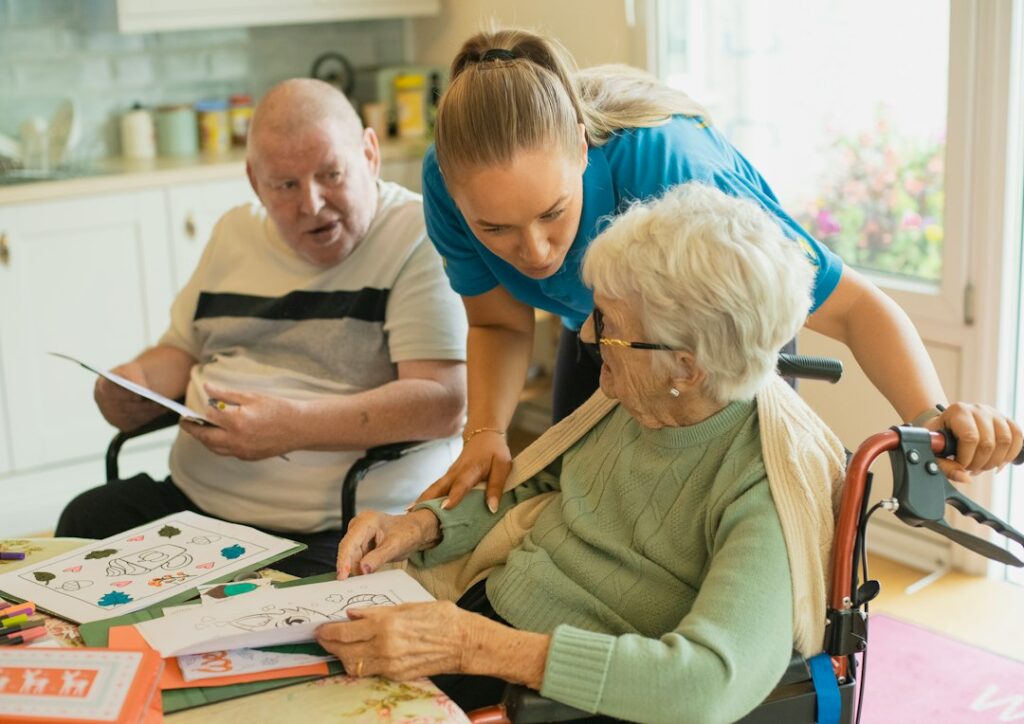
Volunteers can add companionship, creativity, practical support, and community connection to assisted living residences. They do not replace licensed staff or family caregivers, but they can help residents enjoy more meaningful daily experiences and maintain relationships with the wider community.
What do volunteers do in assisted living communities?
Volunteers support activities that improve residents’ social, emotional, and recreational lives. Their duties vary by residence, their training, and the needs of individual residents.
Common volunteer roles include:
- Reading aloud, discussing current events, or helping residents write letters
- Playing cards, board games, music, or other familiar activities
- Accompanying residents during supervised walks or indoor visits
- Helping with crafts, gardening, seasonal decorations, or group programs
- Visiting residents who have few regular visitors
- Assisting with holiday gatherings, faith-based activities, or cultural events
- Sharing hobbies such as knitting, photography, singing, history, or cooking demonstrations
- Supporting technology use, such as video calls with family members
- Helping organize resident councils, newsletters, or community projects
A volunteer may spend an hour talking with one resident, assist with a group activity, or provide support behind the scenes. The value often comes from consistent, respectful interaction rather than the complexity of the task.
How are volunteers different from assisted living staff?
Volunteers provide unpaid companionship or activity support. Staff members are responsible for supervision, personal care, medication-related duties, health monitoring, emergency response, documentation, and other regulated responsibilities.
A volunteer should not independently provide bathing, dressing, toileting, transferring, medication assistance, wound care, or other activities of daily living unless the residence has confirmed that the person meets the required qualifications and training standards. Pennsylvania rules require volunteers who perform certain direct-care tasks to meet applicable staff qualifications and training requirements.
This distinction protects both residents and volunteers. A friendly visitor should never be placed in the position of making a clinical decision, lifting someone without proper training, or responding alone to a medical emergency.
Why does companionship matter for residents?
Regular social contact can reduce loneliness and help residents feel recognized as individuals rather than defined by their care needs. A volunteer who remembers a resident’s favorite music, former occupation, family traditions, or preferred conversation topics can make visits more personal.
Companionship may also encourage residents to participate in activities, eat in shared dining areas, spend time outdoors when conditions permit, or remain connected with interests they had before moving into assisted living.
For residents adjusting to a new setting, a familiar volunteer can provide continuity. This can be especially helpful after a move, a health setback, or the loss of a spouse, friend, or family member.
The benefits are not limited to residents. Volunteers may gain a better understanding of aging, dementia, disability, caregiving, and the importance of accessible community life.
What should families know about volunteer involvement?
Families should view volunteers as an additional source of social connection, not as a substitute for family visits, direct-care staff, or medical services. A volunteer may notice that a resident seems unusually quiet or is not participating as usual, but concerns should be reported to staff rather than handled independently.
Good volunteer programs establish clear boundaries. These may include:
- Signing in and following residence visitor procedures
- Completing orientation and required screening
- Protecting private health and family information
- Avoiding promises that cannot be kept
- Reporting falls, injuries, changes in behavior, or safety concerns promptly
- Following infection-control and illness policies
- Respecting a resident’s right to decline a visit or activity

Residents should always have a choice. A person who is tired, in pain, confused, grieving, or simply not interested should not be pressured to participate.
Are volunteers screened and trained in Pennsylvania?
Requirements depend on the volunteer’s duties and the policies of the assisted living residence. A residence may require identity verification, criminal history checks, references, health information, orientation, confidentiality training, infection-control instruction, or specialized dementia education.
Pennsylvania’s assisted living regulations distinguish between volunteers who provide general activities and those who assist with activities of daily living. Volunteers who perform direct personal-care tasks may be subject to requirements similar to those for direct-care staff.
Volunteers also need instruction on emergency procedures, resident rights, abuse prevention, fall risks, communication, and appropriate boundaries. Training should explain what to do if a resident becomes ill, wanders, falls, expresses fear, or reports mistreatment.
A volunteer does not need to know every medical detail about a resident. The essential responsibility is recognizing when something appears wrong and promptly notifying the appropriate staff member.
What types of volunteers are helpful in Selinsgrove?
The community’s seasonal patterns and housing environment can shape volunteer opportunities. During cold weather, snow, ice, and shorter daylight hours may limit outdoor activities. Indoor visits, music programs, reading groups, exercise activities approved by staff, and video calls can help residents remain socially connected.
During spring and summer, volunteers may support supervised outdoor time, container gardening, porch visits, nature discussions, or small group activities. In autumn, residents may enjoy conversations about harvest traditions, local history, family routines, and seasonal crafts.
People who live nearby may be able to provide regular visits, while students, retirees, faith communities, civic groups, and intergenerational programs may contribute occasional activities. The most useful arrangement is one that matches the volunteer’s availability with the residence’s schedule and the residents’ preferences.
Volunteers do not need to be entertainers. A quiet visitor who listens carefully may be just as valuable as someone leading a large activity.
Can residents volunteer within their own residence?
Residents sometimes help others by welcoming new neighbors, assisting with a game, sharing a skill, or participating in a resident-led activity. This can promote purpose and belonging.
A resident who informally helps another resident is not necessarily treated as a volunteer under Pennsylvania assisted living regulations. Even so, staff should remain aware of the arrangement and make sure the activity is safe, voluntary, and appropriate for both people.
Residents should not be expected to provide personal care, handle medications, lift another person, supervise someone at risk of wandering, or take responsibility for emergencies.
What makes a volunteer program work well?
Effective programs are organized around resident choice and reliable communication. They match volunteers with appropriate activities, explain boundaries clearly, and provide a staff contact for questions or concerns.
Consistency is also valuable. A resident may form a meaningful connection with someone who visits twice a month at a predictable time. If a volunteer cannot attend, notifying the residence helps prevent unnecessary disappointment.
The strongest programs measure success through ordinary moments: a resident joining an activity after weeks of staying apart, recalling a favorite story, making a new friend, or looking forward to a familiar visit. Those outcomes may not appear in a care plan, but they are part of a resident’s quality of life.
