
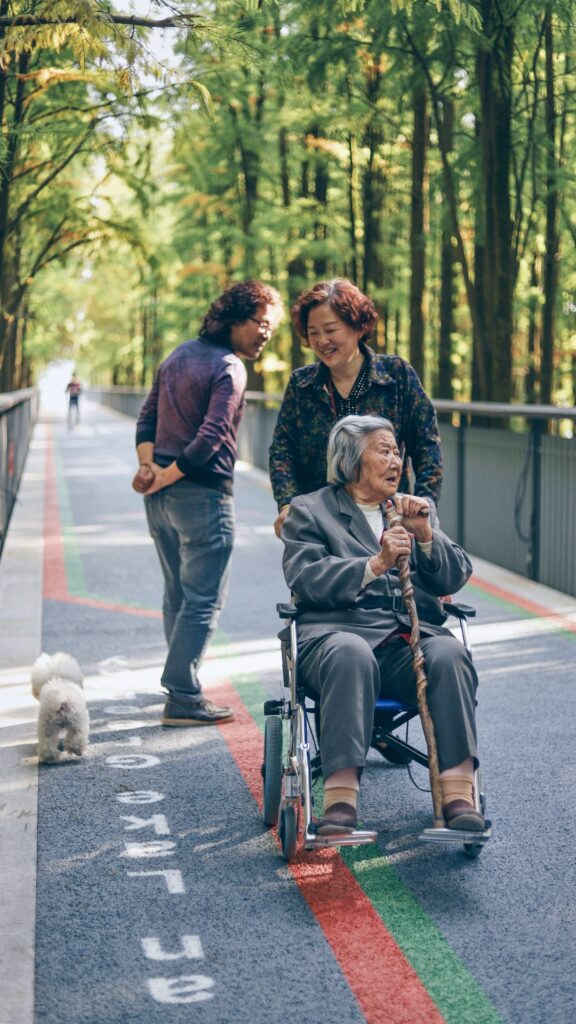
Why transportation matters in assisted living
Transportation helps assisted living residents stay connected to medical care, family, familiar routines, and the wider community. Reliable outings can support independence, reduce isolation, and give residents meaningful choices about how they spend their time.
Transportation needs vary widely. Some residents walk independently, while others use wheelchairs, walkers, canes, or portable oxygen. A person may also need help with balance, memory, communication, medication timing, or getting safely in and out of a vehicle. Good planning begins with the individual rather than assuming every resident has the same abilities.
In Selinsgrove, seasonal weather can affect travel plans. Snow, ice, heavy rain, heat, and uneven outdoor surfaces may make a short trip more difficult than expected. Transportation planning should account for both the destination and the conditions along the way.
What types of transportation may be available?
Assisted living communities commonly coordinate several forms of transportation, depending on staffing, vehicle access, resident needs, and facility policies. Options may include scheduled community outings, medical transportation, family rides, accessible vans, and public or county-supported services.
Community outings are often planned in groups. Examples may include:
- Scenic drives
- Seasonal events
- Libraries and cultural programs
- Shopping trips
- Religious services
- Parks, gardens, and walking areas
- Visits with family members
- Casual meals or social gatherings
Medical transportation usually requires more preparation. A resident may need transportation for primary care, dental visits, therapy, laboratory testing, hospital follow-up, or prescription-related errands. The ride itself is only one part of the process; residents may also need help with check-in, mobility, paperwork, and returning safely to the vehicle.
Not every vehicle can accommodate every mobility device. Before a trip, confirm whether the vehicle can safely hold a standard wheelchair, power wheelchair, scooter, walker, or oxygen equipment. A device that folds may fit differently from one that must remain occupied during travel.
How should a resident prepare for an outing?
A successful outing starts with a realistic assessment of the resident’s energy, mobility, communication, and health needs. The resident should be included in the planning conversation whenever possible.
Useful questions include:
- How long can the resident sit comfortably?
- Will the resident need a restroom soon after arrival?
- Is there a quiet place to rest?
- Can the resident manage uneven pavement, steps, or long hallways?
- Will meals, fluids, or medications be needed during the trip?
- Does the resident become tired, confused, anxious, or overstimulated in unfamiliar places?
- What should happen if the weather changes?
Comfortable clothing and supportive footwear can reduce problems during travel. A resident may also need a sweater, hat, sunglasses, a rain layer, or extra protection from cold temperatures. In warm weather, shade, water, and shorter activity periods may be necessary.
Bring only what is needed, but make sure essential items are available. These may include identification, emergency contact information, mobility aids, hearing devices, glasses, tissues, incontinence supplies, a phone, and any permitted medications or medical equipment.
What makes transportation safer for residents with mobility limitations?
Safety depends on careful transfers, secure equipment, and enough time. Rushing increases the risk of falls, missed steps, and confusion.
Residents using walkers should generally have the device available as soon as they exit the vehicle. Wheelchairs and scooters should be secured according to the vehicle’s safety procedures. A seat belt is needed even when a resident uses a mobility device, unless a qualified transportation system has a different approved arrangement.
The pickup and drop-off area matters as much as the vehicle. Look for:
- A level surface
- Adequate lighting
- Clear walking paths
- Minimal traffic
- Protection from snow, ice, and standing water
- Space to open vehicle doors fully
- Enough room for a wheelchair ramp or lift
Do not treat a transport chair, walker, or wheelchair as a substitute for a seat belt or proper vehicle restraint. Mobility equipment is designed to support movement, not necessarily to protect someone during sudden braking or a crash.
Residents with vision or hearing loss may need verbal descriptions of the environment. A simple explanation such as “There is a curb directly ahead” can be more useful than a general warning. Staff and family members should avoid pulling a resident suddenly or moving equipment without explaining what is happening.
How can medical trips be organized more effectively?
Medical transportation should be arranged well before the appointment, particularly if a lift-equipped vehicle, escort, or extra transfer assistance is needed. Confirm the appointment time, expected length, destination entrance, and whether the resident must bring paperwork or equipment.

It is also helpful to ask whether the resident will be able to leave immediately after the visit. Some appointments may involve delays, fatigue, temporary weakness, or changes to medication instructions. The return ride should allow enough flexibility rather than being based on an unrealistically short appointment window.
The transportation plan should identify who is responsible for:
- Helping the resident leave the building
- Bringing medical information
- Accompanying the resident inside
- Communicating changes to the assisted living team
- Handling prescriptions or written instructions
- Confirming the resident has returned safely
If a resident has dementia or significant memory loss, unfamiliar transportation may cause distress. Familiar faces, simple explanations, visual reminders, and a predictable routine can make the trip easier. Avoid giving complicated directions or too much information at once.
What should families ask before arranging a ride?
Families should ask specific questions rather than assuming that transportation is included or available for every purpose. Policies may differ for medical appointments, personal errands, evening outings, weekends, and trips outside the normal service area.
Important questions include:
- Is transportation scheduled in advance?
- Are rides shared with other residents?
- Can a companion accompany the resident?
- Is there a limit on trip duration or distance?
- Can the vehicle accommodate the resident’s mobility device?
- Is door-to-door assistance provided, or only transportation to the entrance?
- What happens if the resident is late returning?
- How are cancellations, weather delays, or emergencies handled?
- Are there additional safety requirements for oxygen, transfers, or special equipment?
These questions help prevent a common misunderstanding: transportation may mean getting from one location to another, while an outing may require supervision, navigation, personal care, and support throughout the activity.
How can outings remain enjoyable and manageable?
The most successful outings are not necessarily the longest. A short trip with time to sit, talk, and observe may be more enjoyable than a busy schedule involving several stops.
Plan around the resident’s best time of day. Some people are more alert in the morning, while others need time to settle into the day. Keep the group size, noise level, walking distance, and number of decisions reasonable.
Residents should have choices whenever possible. Offering two suitable activities can preserve independence without creating unnecessary confusion. For example, a resident might choose between a quiet scenic drive and a short community visit.
Pay attention to signs that the outing should end, including unusual fatigue, irritability, sweating, pallor, shortness of breath, increased confusion, pain, or repeated requests to leave. Returning early is not a failure; it is a sensible response to the resident’s condition.
Transportation is most helpful when it supports more than movement. A well-planned ride can help residents maintain relationships, attend important appointments, enjoy familiar surroundings, and continue participating in ordinary community life with dignity and appropriate safety support.
